Less
chemicals.
More impact.
Atmospheric plasma reactors and surface treatment for industry, directly on your production lines.
Our work has been covered by












What plasma fixes on your surfaces
A process that adapts to your sector Show the main industries


No vacuum or solvent

-
Continuous
On your conveyor, in open air.
-
In seconds
No pumping, no vacuum chamber.
-
No VOCs
No primer: ready to bond, paint or print.
Validated on your parts
- Trials in our laboratory, before any purchase
- A file for your audits
- Experts, in French or in English
Customer case
[x] secteur, [x] mesure avant et après, [x] témoignage signé
Compare with vacuum plasma and chemical primer
 Atmospheric plasma |
Vacuum plasma | Chemical primer | |
|---|---|---|---|
| In-line integration | Yes, continuous | No, in batches | Yes |
| Initial investment | Medium | High (pumps, chamber) | Low |
| Solvents / VOCs | None | None | Yes |
| Part size | Not limited | Limited by the chamber | Not limited |
| Cycle time | Seconds | Minutes (pump-down) | Drying required |
What plasma does not do: it does not replace heavy degreasing. On an oily part, we clean first, and we tell you so at the diagnosis.
From first email to production line
-
Answer within 48 h
You write to us
An email, a call or the form. An expert answers you, not a sales department.
You leave withA first technical read on your case.
Take the assessment -
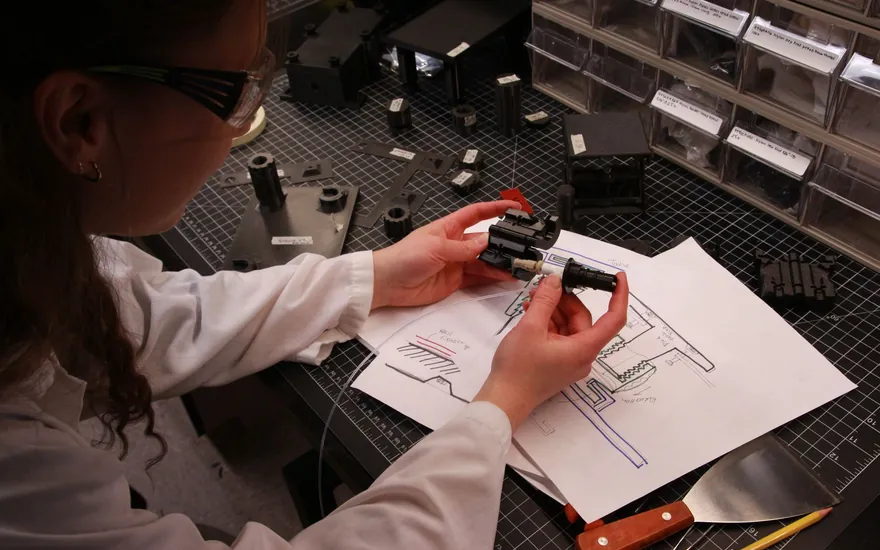
Diagnosis
We take in your material, your goal and your production constraints.
You leave withA feasibility report: what plasma can do on your surface, and what it will not do.
Discover consulting -
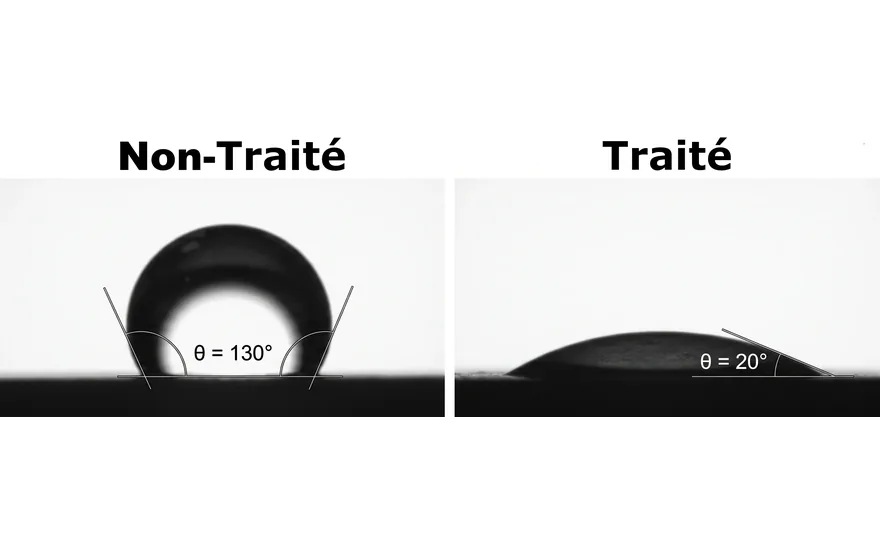
Validation
We treat your parts in-house and measure the effect: contact angle, surface energy, duration.
You leave withA characterisation file: before/after measurements, how long the effect lasts, the parameters retained.
Send samples -
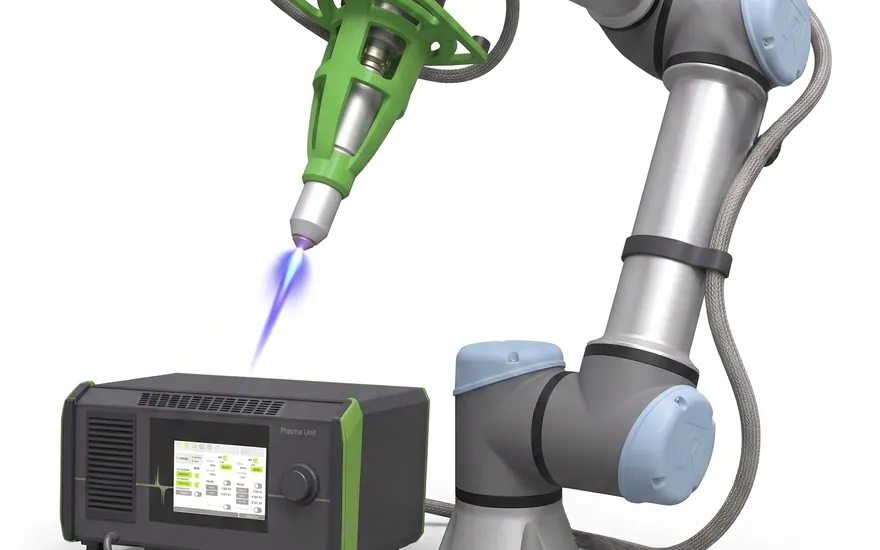
Integration
We install the equipment on your line and tune the process until it meets your industrial throughput.
You leave withA documented, parameterised process, ready for your customer audits.
See the equipment
What we need from you
- DiagnosisThe datasheet for your material and, if possible, a few photos of the part.
- Validation3 to 5 samples representative of your production.
- IntegrationA line-stop window of about two days for installation and set-up.
If plasma is not the right answer to your problem, we tell you at step 1.
Ten experts, one laboratory in Quebec City
Marine Queffeulou, PhD
A PhD holder and entrepreneur, Marine leads Kalego's commercial strategy and bridges plasma science and North American industry.
Jacopo Profili, PhD
A PhD in plasma physics, Jacopo signs off on the scientific design of the reactors and processes.
Answers before you commit
Your question is not here? Write to us, an expert will answer.
Is my material compatible with plasma?
How do I know whether plasma will solve my adhesion or fogging problem?
How long does it take to integrate a reactor into my line?
Can you treat my parts before I buy equipment?
How long does the plasma treatment effect last?
See the other questions
What documents do you provide for my customer audits?
What does a plasma project at Kalego cost?
An answer within 48 h
on what plasma
can do for your surfaces.
A few questions about your parts and your line: you leave with a recommendation, and an expert takes up your case.
Take the assessmentNo commitment. A technical discussion with an expert.