Most requested
Consulting
From idea to market. We characterise your need, validate feasibility and support the scale-up.
- Technical diagnosis and plasma feasibility
- Pilot testing in our facilities
- Regulatory and industrial support
Atmospheric plasma reactors and surface treatment for industry
Designed in North America. To activate, clean and functionalise your surfaces without chemical solvents, directly on your production lines.
As seen in











20 Years of expertise in plasma surface treatment
15+ Sectors served
From idea to market. We characterise your need, validate feasibility and support the scale-up.
Our turnkey solutions and custom configurations. Atmospheric pressure plasma reactors designed in North America, ready to integrate into your production lines.
We treat your parts in our facilities in Quebec City, long enough to validate the process and build your qualification file.
Not sure which box you fall into ? Start from the problem.
Already know which treatment you are looking for ? See the nine systems, sorted by the problem they solve →

Catheters, face shields, diagnostic devices, biocompatible surfaces.

Composite surface preparation, adhesion of thermal coatings, treatment of structural parts.

Treatment of technical materials, functional surfaces for demanding environments, documented qualification.

Solar panels, electrode treatment, battery and fuel cell surfaces.

Cell culture surfaces, microfluidic supports, biosensors and laboratory devices.

Circuit cleaning, activation before encapsulation, ink guiding and printing on connectors and housings.

Rail, marine and heavy vehicles. Adhesion on composites, gasket sealing, technical glazing.

Adhesion on technical polymers, better durability of paints and inks, throughput gains in line.

Anti-fog eyewear, transmission treatments, durable transparent surfaces.

Polymer films, anti-fog refrigerated display cases, functional barriers.

Polymer activation before printing, ink adhesion on difficult substrates, technical finishes.

Technical textiles, fibre functionalisation, durable hydrophilic or hydrophobic treatments.

Packaging films with a functional barrier, treatment of food-contact surfaces, anti-fog for display cases.

Better leaf wettability, seed treatment, functionalisation of agricultural films.

Adhesion on technical composites, treatment of lightweight materials, functional finishes for equipment.
An email, a call or the form. Describe your part and your goal, even roughly: an engineer answers you, not a sales department.
You leave withA first technical read on your case.
On your sideNothing. It is free and without commitment.
We take in your material, your goal (adhesion, wettability, deposition) and your production constraints.
You leave withA feasibility report: what plasma can do on your surface, and what it will not do.
On your sideThe datasheet for your material and, if possible, a few photos of the part.

We treat your parts in our facilities, characterise the surfaces (contact angle, surface energy, how long the effect lasts) and document the process.
You leave withA characterisation file: before/after measurements, how long the effect lasts, the parameters retained.
On your side3 to 5 samples representative of your production.

We integrate the equipment on your production line and adjust the parameters until the process is optimal, ready for industrial throughput.
You leave withA documented, parameterised process, ready for your customer audits.
On your sideA line-stop window of about two days for installation and set-up.

If plasma is not the right answer to your problem, we tell you at step 1.
The process runs in open air, directly on your conveyors, on parts of any size.
A few seconds per pass · contact angle brought from 130° down to 20°
You talk to the engineers who built your reactor. Same time zone, service in French and in English.
Workshop in Quebec City (QC) · FR / EN service · Eastern time zone
Five disciplines brought together on every project: physics, chemistry, process engineering, mechanics and instrumentation.
10 people · 5 disciplines · 20 years of R&D
Against the two most common alternatives for preparing a surface before bonding, painting or printing:
| Our technology Atmospheric plasma | Vacuum plasma | Chemical primer | |
|---|---|---|---|
| In-line integration | Yes, continuous | No, in batches | Yes |
| Initial investment | Medium | High (pumps, chamber) | Low |
| Solvents / VOCs | None | None | Yes |
| Part size | Not limited | Limited by the chamber | Not limited |
| Cycle time | Seconds | Minutes (pump-down) | Drying required |
Scroll the table horizontally →
What plasma does not do: it does not replace heavy degreasing. On an oily part or one covered in mill scale, you have to clean first — we will tell you so at the diagnosis stage.
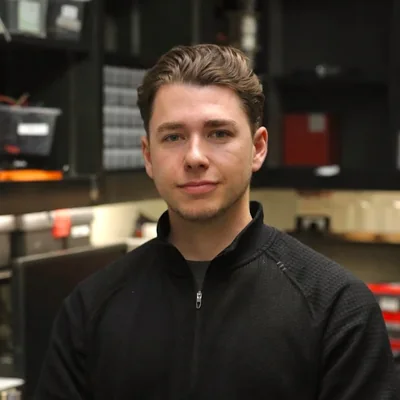

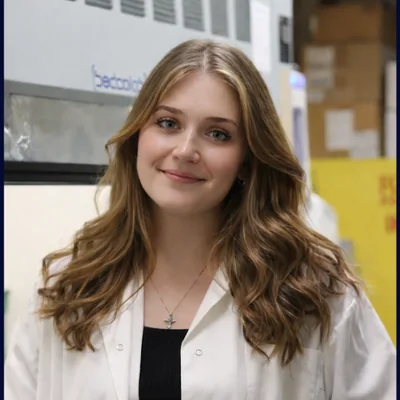
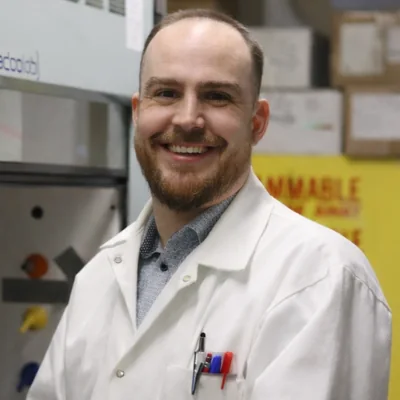
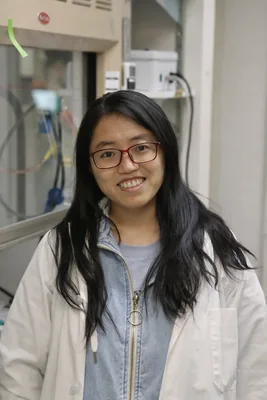
A PhD holder and entrepreneur, Marine leads Kalego's commercial strategy and development. She bridges plasma science and the concrete needs of North American industry.
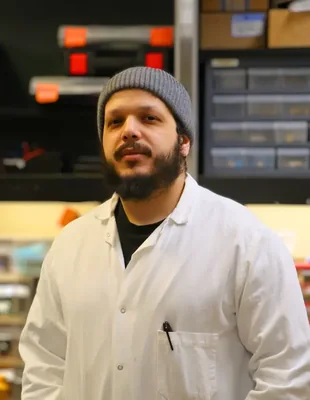
See the profileA PhD in plasma physics, Jacopo signs off on the scientific design of the reactors and processes. His academic publications underpin Kalego's technical authority.
See the publications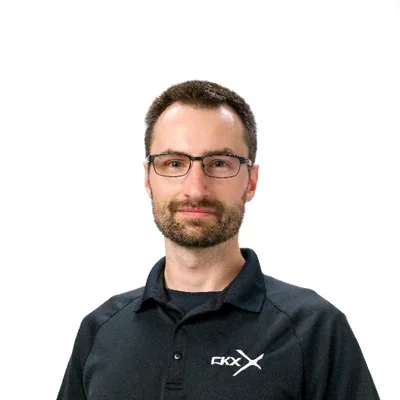


How plasma modifies a surface at the nanoscale to improve adhesion, wettability and cleanliness.
Cost, integration, material compatibility. A practical comparison for choosing the right configuration.
Surface preparation methods, ranked by effectiveness and cost. Why DBD plasma has become the reference.
A weighted decision grid, a decision tree, a total cost of ownership breakdown and the 12 questions to ask a supplier before you sign.
Answers to the questions that come up most often. If yours is not listed, write to us. We answer every enquiry within 48 business hours.
Ask it here. An expert answers you within 48 business hours, without commitment.
An engineer’s answer within 48 business hours on what plasma can do for your surfaces. No commitment, just clear answers from an expert.
Answer within 48 hours. No commitment. A technical discussion with an expert.